
NOONG Meaning in Tagalog: How to Say "When" in Filipino
How to say “when” in Tagalog for past events? The word “noong” is used to indicate a specific time, date, or period in the past. In this Tagalog lesson, you’ll see practical examples showing how to use “noong” in sentences about past events, experiences, and dates, with natural English translations. This Filipino language tutorial is ideal for learners looking to talk about past events in Tagalog naturally and understand how to say when in the past like a native speaker.
How to Say WHEN or BACK THEN in Filipino: Watch this Tagalog Lesson for Beginners
Mahiyan ako noong high school ako. (I was shy back in high school.)
Noong 2020 nagsimula ang pandemya. (The pandemic started in 2020.)
Nilindol nang malakas ang Luzon noong June 16, 1990. (A strong earthquake hit Luzon on June 16, 1990.)
Nag-resign siya sa trabaho noong Abril (She resigned from her job in April.)
Nagluto si Lola ng pancit bihon noong birthday ko. (Grandma cooked pancit bihon on my birthday.)
Niregaluhan ko siya ng relo noong anniversary namin. (I gave him a watch on our anniversary.)
Pumunta ako sa Fisherman’s Bastion noong isang taon. (I went to Fisherman’s Bastion last year.)
Nagpa-wax ako ng kilikili noong Biyernes ng hapon. (I got my underarms waxed on Friday afternoon.)
Ang saya-saya niya noong huli kaming nagkita. (She was really happy when we last met.)
Featured Filipino Word
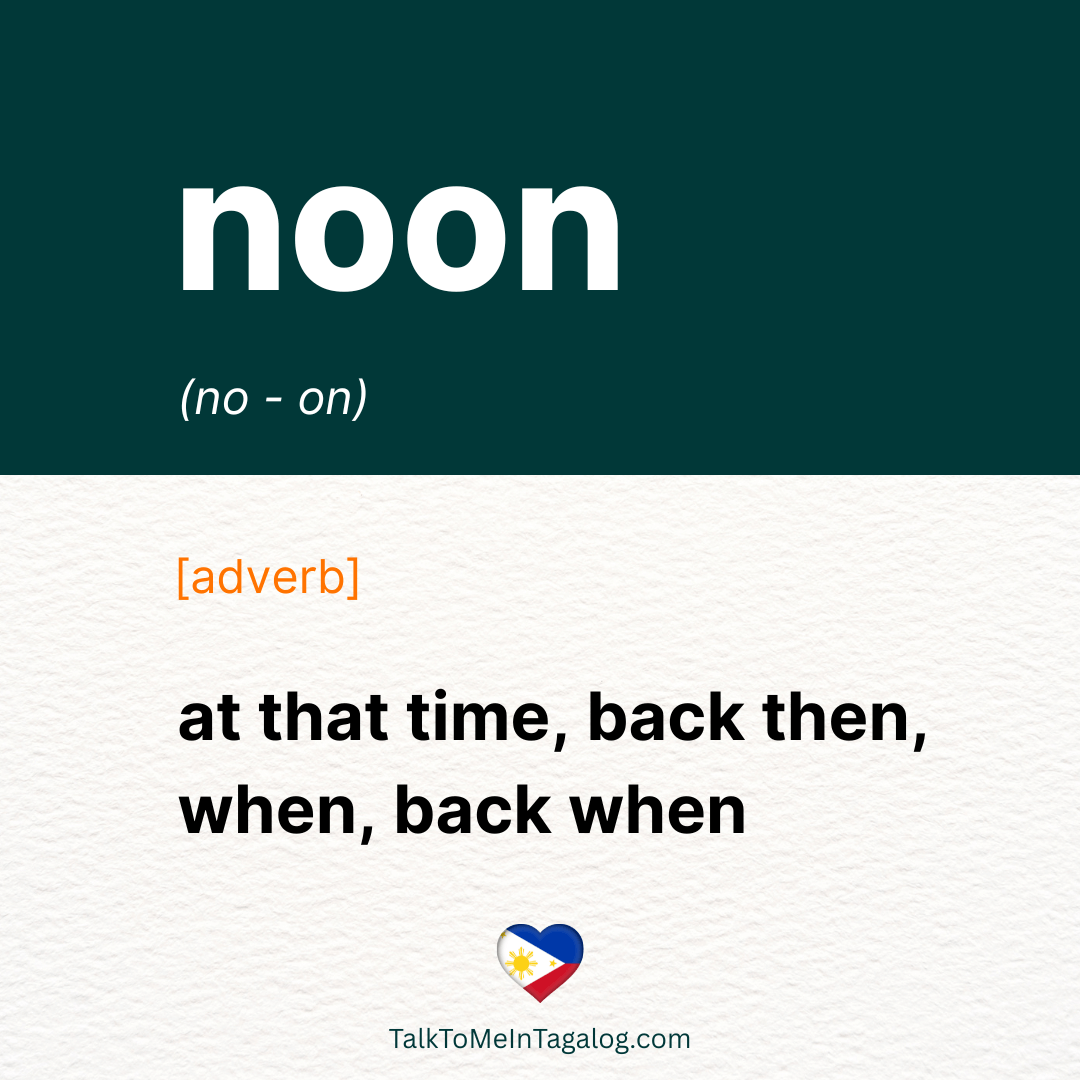
Noong bata pa ako, mahilig akong maglaro sa ulan. (When I was a kid, I loved playing in the rain.)
Nawalan ng kuryente noong bumagyo. (The power went out when the storm hit.)
Umaasa lang akong sa mga magulang ko noong wala pa akong trabaho. (I relied only on my parents when I didn’t have a job yet.)
Natakot ang mga bata noong sumigaw ako. (The kids got scared when I yelled.)
Naiyak ako noong napanood ko ‘yon. (I cried when I saw that.)
Inalagaan niya ako noong may sakit ako. (She took care of me when I was sick.)
Nagpa-despedida kami noong huling araw niya sa trabaho. (We threw a farewell party on her last day at work.)
Natawa ako noong sinabi niya ‘yon. (I laughed when he said that.)
Malamig noong nagpunta kami sa Milan. (It was cold when we went to Milan.)
Ang tahimik mo noong una tayong nagkakilala. (You were so quiet when we first met.)
Nagtakbuhan ang mga itik noong habulin ng aso. (The ducks ran off when the dog chased them.)
Kinilig ako noong binigyan niya ako ng bulaklak. (I got butterflies when he gave me flowers.)
Noong hindi pa uso ang cellphone, landline lang ang gamit namin. (When cellphones weren’t common yet, we only used a landline.)
Hindi ko talaga nagustuhan ang durian noong una kong matikman. (I really didn’t like durian when I first tasted it.)
Akala ko may emergency noong bigla kaming pinauwi lahat. (I thought there was an emergency when we were suddenly all sent home.)
Halos hindi siya nagsalita buong araw noong bumagsak siya sa exam. (He barely said a word all day, when he failed the exam.)
Marami kaming naiwang gamit noong lumipat kami ng bahay. (We left behind a lot of stuff when we moved to a new house.)
Nakilala ko agad siya noong marinig ko ang boses niya. (I recognized her right away when I heard her voice.)
Parang nag-iba ang mundo ko noong nakilala ko siya. (My world kind of changed when I met him.)
Natutong magtanim ang marami noong nagka-lockdown. (A lot of people learned to garden during the lockdown.)
Nagulat kaming lahat noong pumutok ang balita. (We were all shocked when the news broke.)
Watch more Tagalog Learning Videos
Learn how to say “if” in Tagalog using the word “kung” in natural Filipino sentences and real-life situations. This video is perfect for learners searching how to use ‘kung’ in Tagalog grammar or mastering Filipino conditional statements. Watch now to speak more confidently and naturally in Tagalog!
Understand how to use the Tagalog conjunction “kapag” to say “when” in future or habitual situations with natural Filipino examples. This video is perfect for learners searching how to use ‘kapag’ in Tagalog grammar or mastering Filipino conditional and time expressions. Watch now to speak Tagalog more fluently and accurately!
Connect
Our YouTube Channels
Talk to Me in Tagalog
English-Tagalog Speaking Practice
Learn Filipino Language
OFW English Lessons
Want to support us?