
How to Count Money in Tagalog
Learn how to count money in Tagalog and talk about prices in the Philippines! This Filipino language lesson teaches you how to say Philippine peso amounts, use Tagalog words for coins and bank notes, and understand common money phrases used in markets, stores, and public transport fare. Practice counting pesos, giving change, and handling everyday transactions with natural Tagalog examples and English translations—perfect for travelers and learners who want to sound local when shopping or paying in the Philippines.
Philippine Peso & Counting Money in Filipino: Watch This Beginner Tagalog Video
Banknotes of the Philippine Peso (2026)
Here are the Philippine paper banknotes currently in circulation, officially issued by the Bangko Sentral ng Pilipinas (BSP).
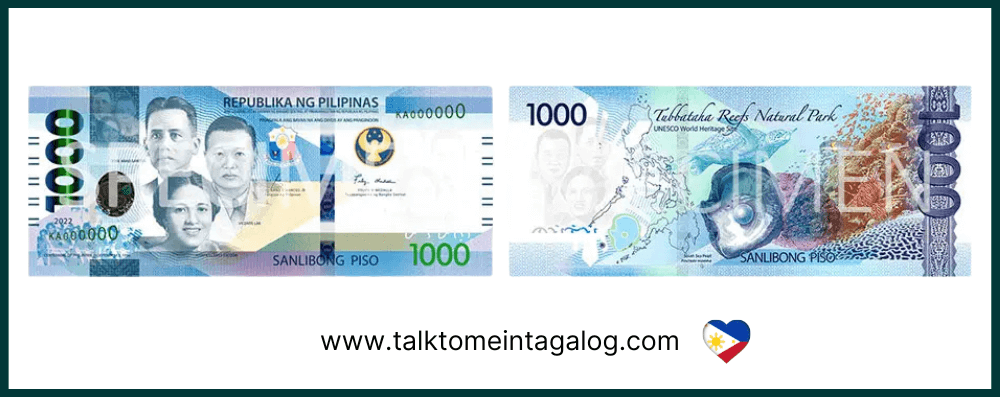
Isang Libong Piso
The 1000 Philippine peso paper banknote showing Jose Abad Santos, Vicente Lim, and Josefa Llanes Escoda on the front, and the Tubbataha Reefs Natural Park with the South Sea Pearl on the back.
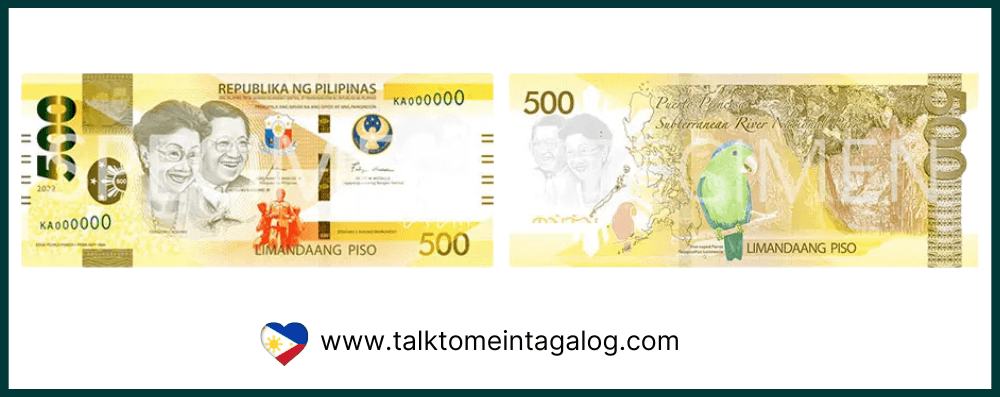
Limandaang Piso
The 500 Philippine peso paper banknote featuring Benigno Aquino Jr. and Corazon Aquino on the front and the Subterranean River National Park in Palawan on the back.
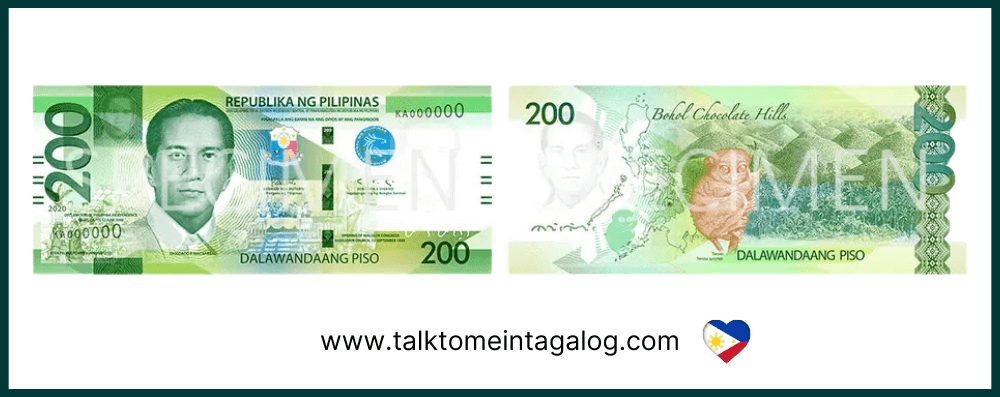
Dalawandaang Piso
The 200 Philippine peso paper bill with Diosdado Macapagal on the front and the Chocolate Hills of Bohol with the tarsier on the back.
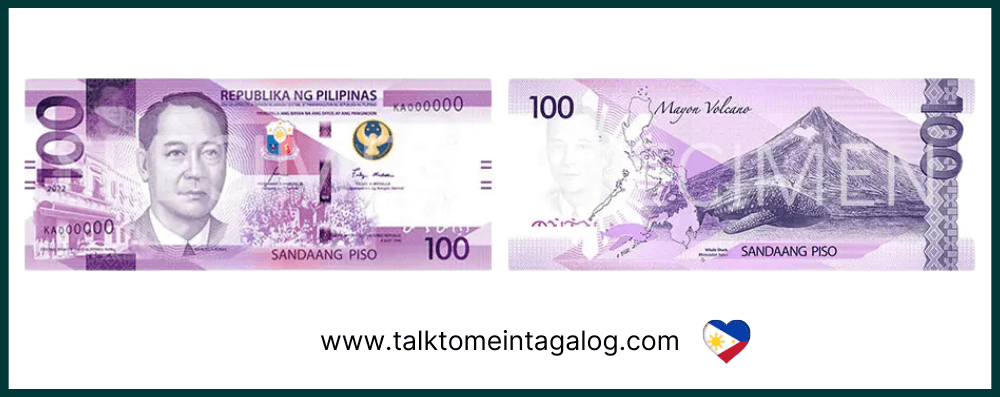
Isang Daang Piso
The 100 Philippine peso paper banknote featuring Manuel A. Roxas on the front and the Mayon Volcano with a perfect cone shape on the back.
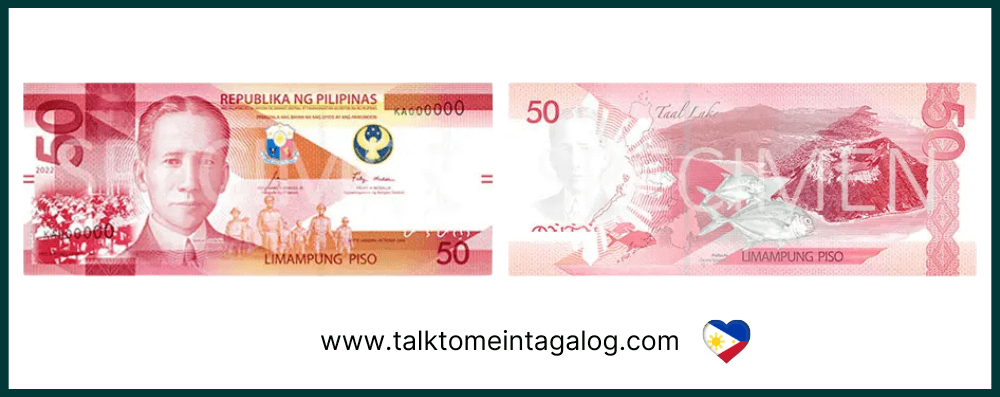
Singkuwenta Pesos (Limampung Piso)
The 50 Philippine peso paper bill showing Sergio Osmeña on the front and the Taal Lake and Taal Volcano on the back.
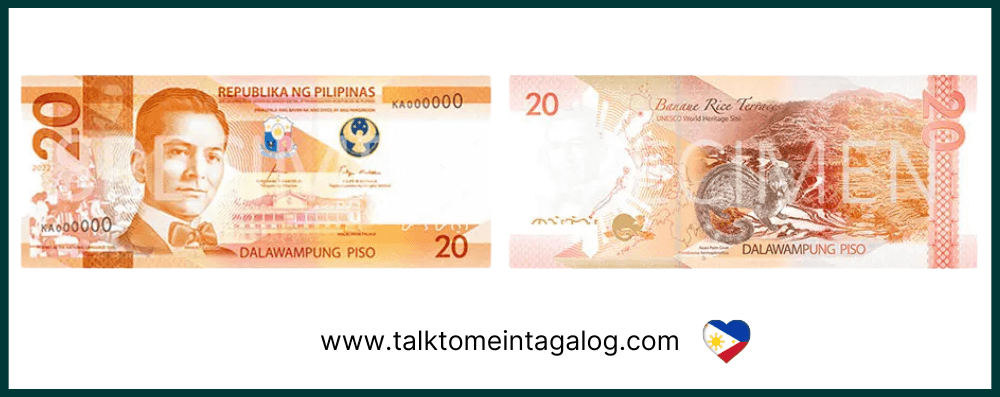
Bente Pesos (Dalawampung Piso)
The 20 Philippine peso paper banknote featuring Manuel L. Quezon on the front and the Banaue Rice Terraces with a Philippine palm civet on the back.

Philippine Polymer Banknotes in Circulation – BSP Official Notes
Learn about the current Philippine polymer banknotes in circulation, officially issued and regulated by the Bangko Sentral ng Pilipinas (BSP).
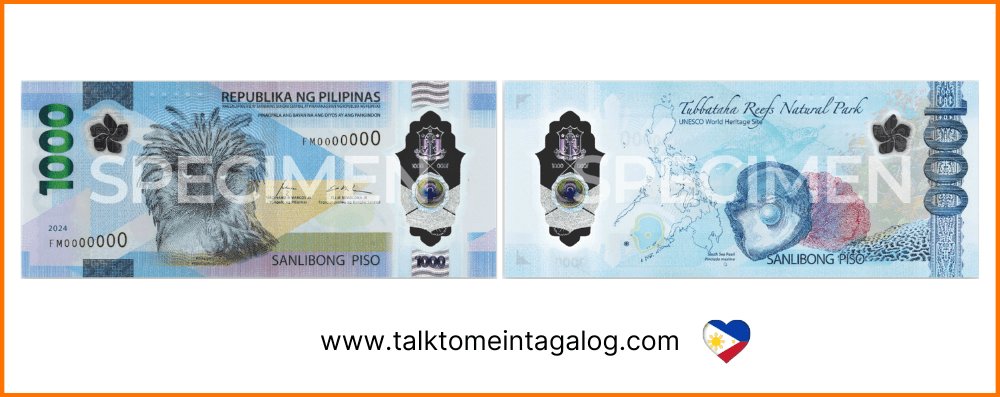
Isang Libong Piso
The 1000 Philippine peso polymer banknote featuring the Tubbataha Reefs Natural Park, South Sea Pearl, and Philippine Eagle – new BSP design from the New Generation Currency series used in the Philippines.
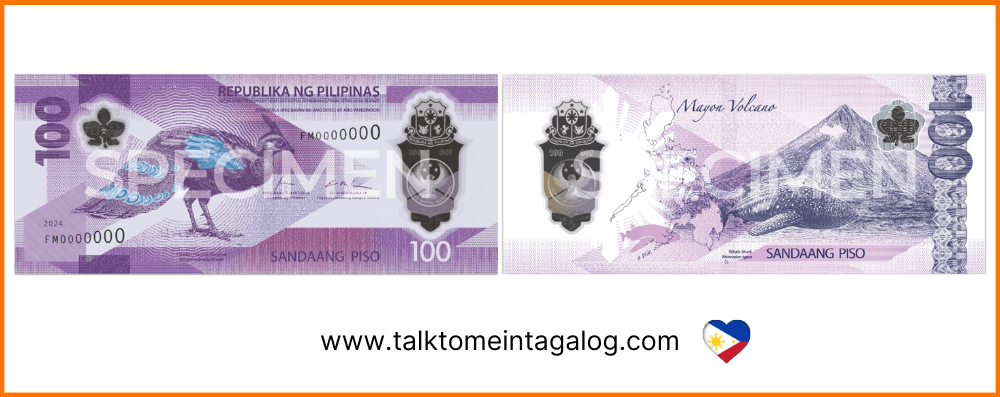
Isang Daang Piso
The 100-piso polymer banknote features the endemic and endangered Palawan peacock-pheasant and the iconic Mayon Volcano and the native and endangered whale shark on the back.
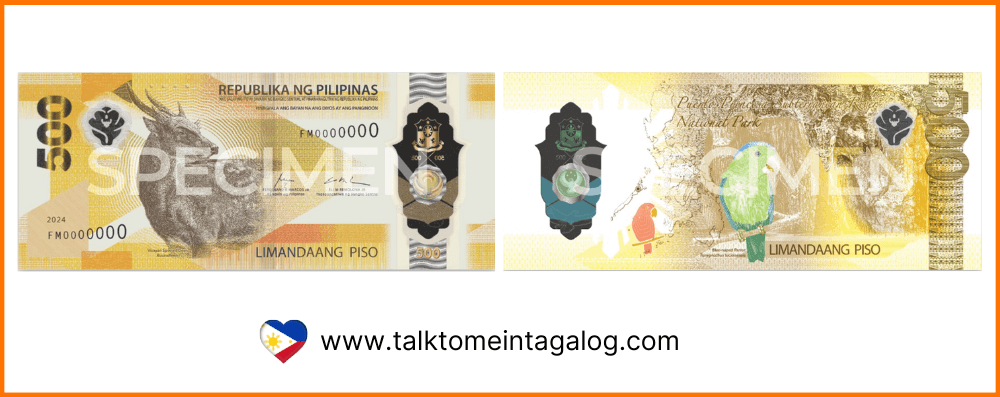
Limandaang Piso
The 500-peso polymer banknote features the endemic and critically endangered Visayan spotted deer on the front and the reverse side highlights the Puerto Princesa Subterranean River National Park and the native and critically endangered blue-naped parrot.
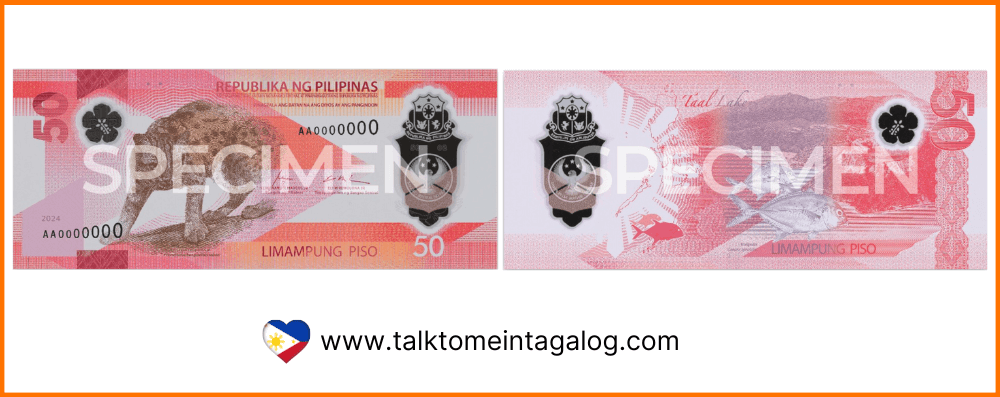
Singkuwenta Pesos
The 50-piso polymer banknote highlights the endemic subspecies and vulnerable Visayan leopard cat on the front and the reverse side shows the Taal Lake and the native maliputo fish.
Coins of the Philippine Peso (2026)
Learn everything about the coins of the Philippine peso with this complete guide. Discover the Philippine peso coin denominations list, how to identify Philippine peso coins, and understand their values and sizes. Explore the history and features of Philippine peso coins and get tips for coin collectors and beginners alike. Perfect for students, learners, and anyone curious about Filipino currency.
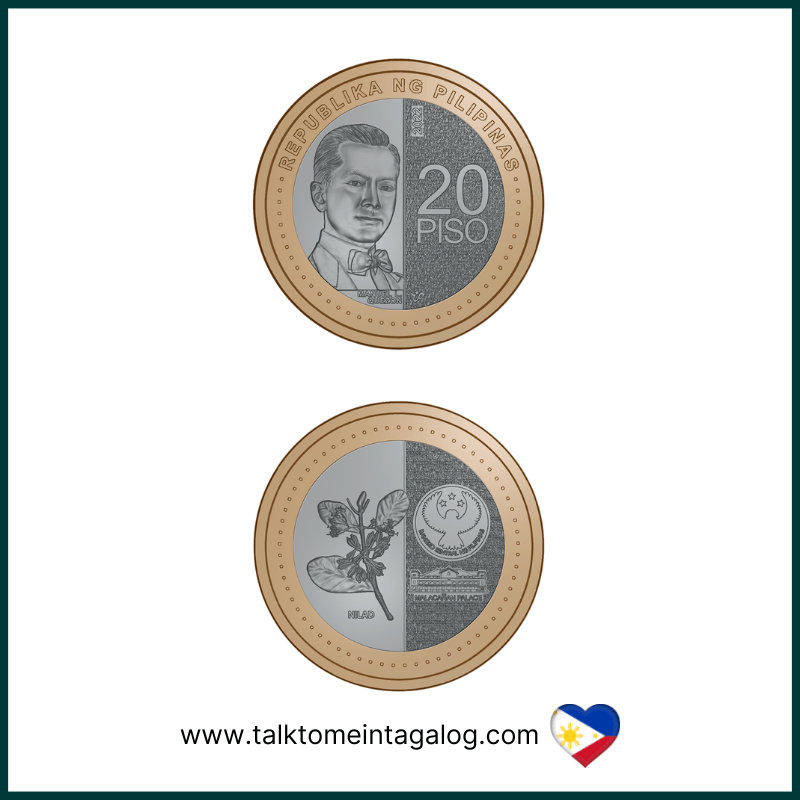
Bente pesos
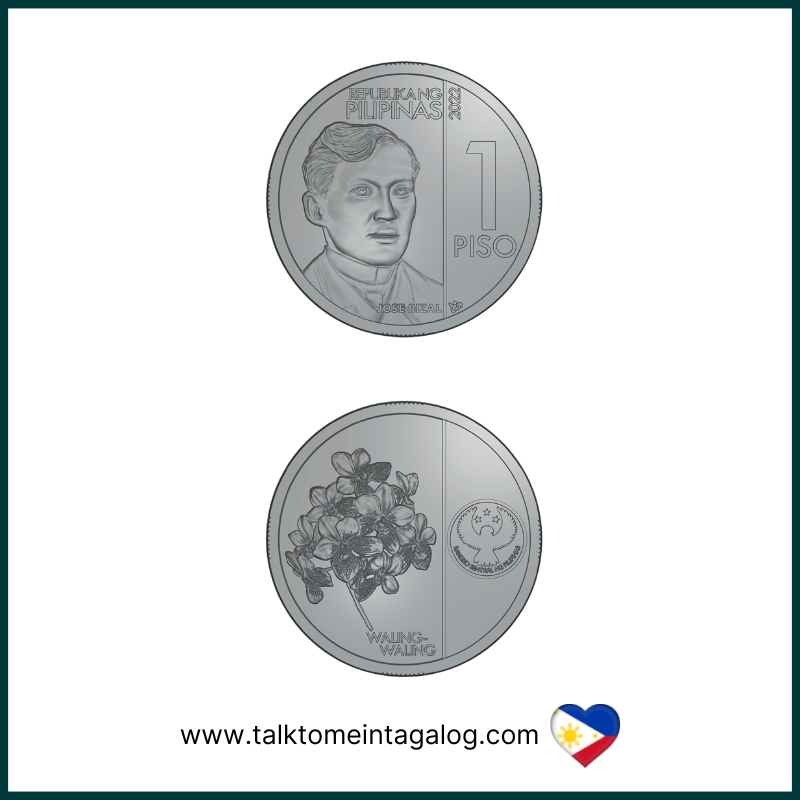
Piso
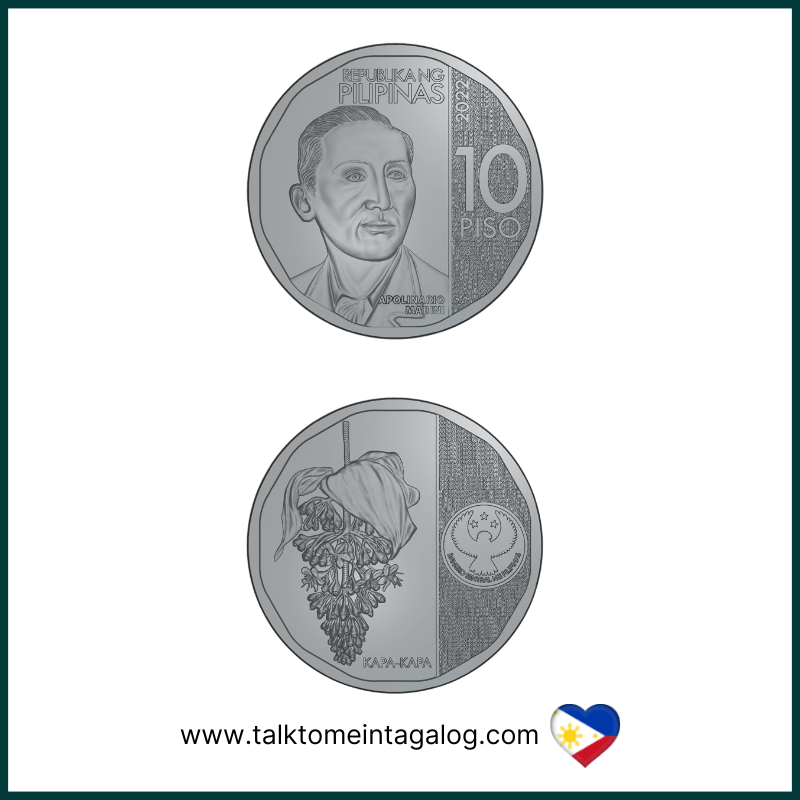
Sampung piso
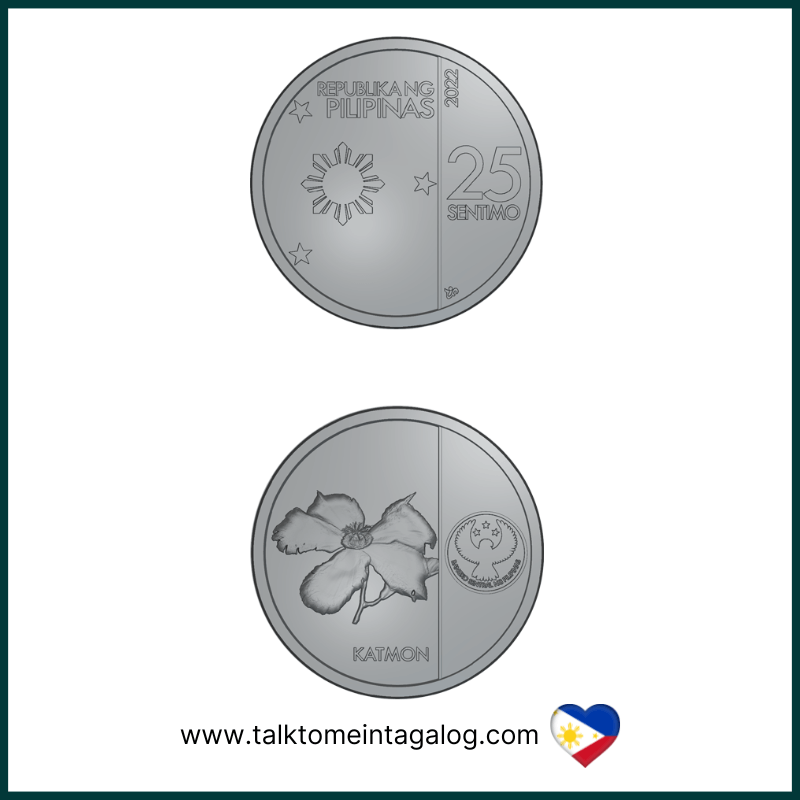
Bente-singko Sentimos
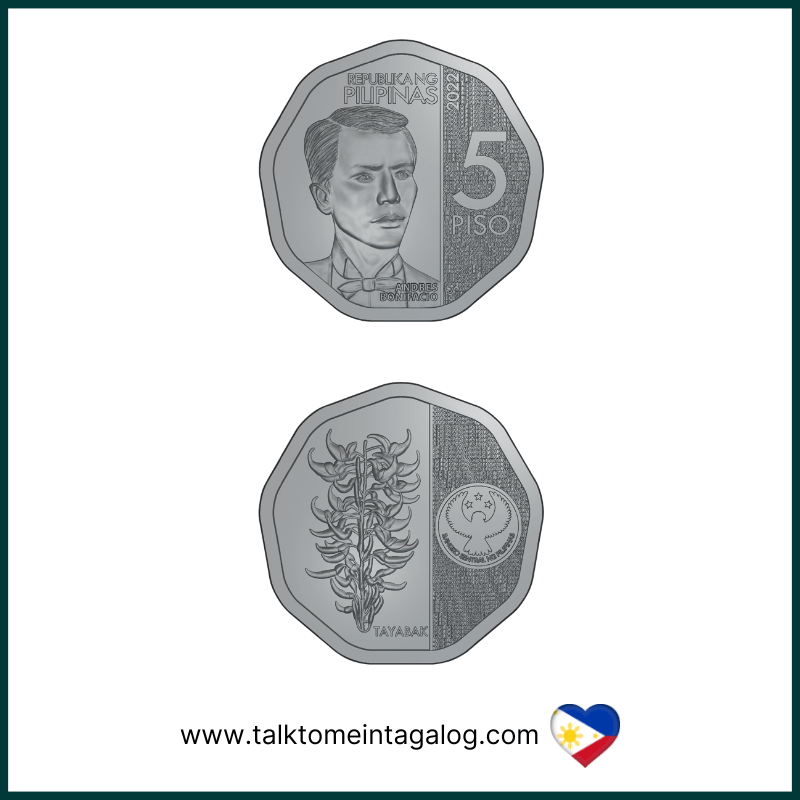
Limampiso
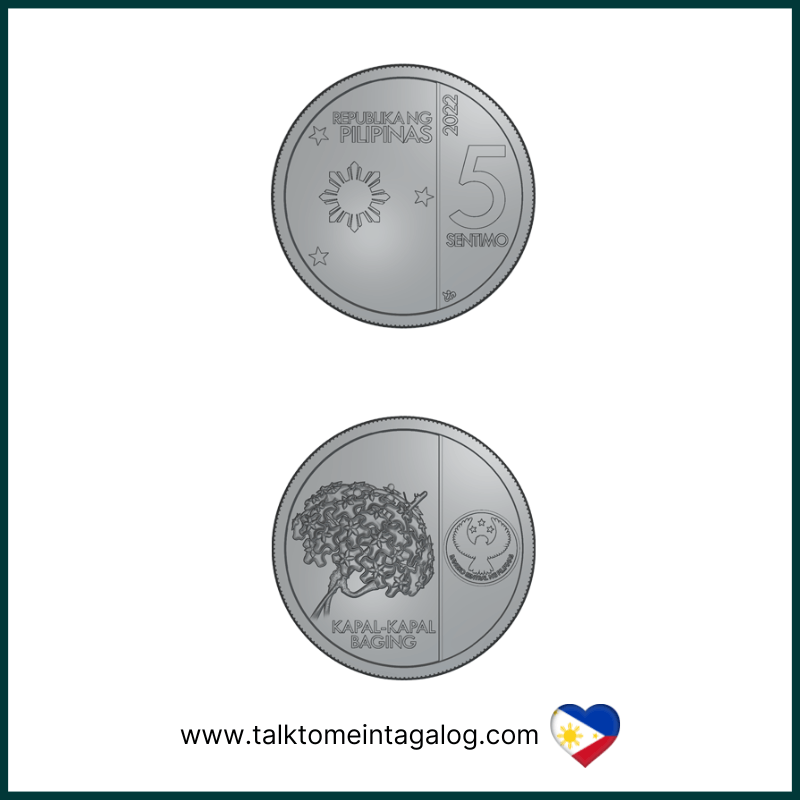
Singko Sentimos
| Trese pesos ang pamasahe sa jeep. |
| (‘The jeepney fare is thirteen pesos.) |
| Mahigit singkuwenta pesos ang presyo ng bigas sa palengke. |
| (Rice costs more than fifty pesos at the market.) |
| Pahingi naman ako ng isang daan. May bibilhin ako. |
| (Can you give me a hundred pesos? I need to buy something.) |
| Limandaan ko nabili ang paldang ‘to. |
| (I bought this skirt for five hundred pesos.) |
|
Dalawang daang piso ang isang kilong patatas ngayon. |
| (Potatoes are two hundred pesos per kilo now.) |
|
Sampung libo na lang ang pera ko sa pitaka. |
| (There’s only ten thousand pesos left in my wallet.) |
| Pautang nga ng bente pesos. |
| (Can you lend me twenty pesos?) |
How good are you at counting money in Tagalog? Test your skills with this quiz and see if you can say amounts correctly in Filipino! Try to answer each question before clicking the toggle to reveal the right amount. Whether it’s pesos or centavos, this quiz will help you get better at counting money in Tagalog with ease!
1. If I give you a 50-peso bill, 3 one-peso coins, and 25 centavos, how much is the total?
Answer: Limampu’t tatlong piso at dalawampu’t limang sentimo | Singkuwenta y tres pesos at singko sentimos (₱53.25)
2. A mango costs 35.75 pesos and you buy 2. How much do you pay?
Answer: Setenta y uno pesos, singkuwenta sentimos (₱71.50)
3. You have 100 pesos. You buy a snack for 37.50 pesos. How much change will you get?
Answer: Animnapu’t dalawang piso at limampung sentimo | Sisenta y dos pesos, singkuwenta sentimos (₱62.50)
4. You pay for a bus fare of 13.25 pesos using a 200-peso bill. How much change do you get?
Answer: Isandaang walumpu’t anim na piso at pitumpu’t limang sentimo | Syento otsenta y sais pesos setenta y sinko sentimos (₱186.75)
5. If a sandwich costs 25.75 pesos and a drink costs 18.50 pesos, how much do you pay for both?
Answer: Apatnapu’t apat na piso at dalawampu’t limang sentimo | Kuwarenta y kuwatro pesos, bente singko sentimos (₱44.25)
Watch more Tagalog Learning Videos
Watch this video to learn how to count numbers in Filipino with clear examples and pronunciation tips. Master Tagalog numbers from 1 to 100 and use them confidently in everyday conversations, shopping, telling time, and more.
Learn how to say 1st, 2nd, 3rd, and all other ordinal numbers in Filipino with easy examples and correct pronunciation. This quick lesson helps you master Tagalog ordinal numbers for dates, rankings, and everyday use.
Learn how to tell time in Filipino with clear pronunciation and practical examples. This video shows you how to ask and say the time naturally, so you can confidently use Tagalog in everyday conversations.
Connect
Our YouTube Channels
Talk to Me in Tagalog
English-Tagalog Speaking Practice
Learn Filipino Language
OFW English Lessons
Want to support us?