
Food Tastes and Textures in Tagalog
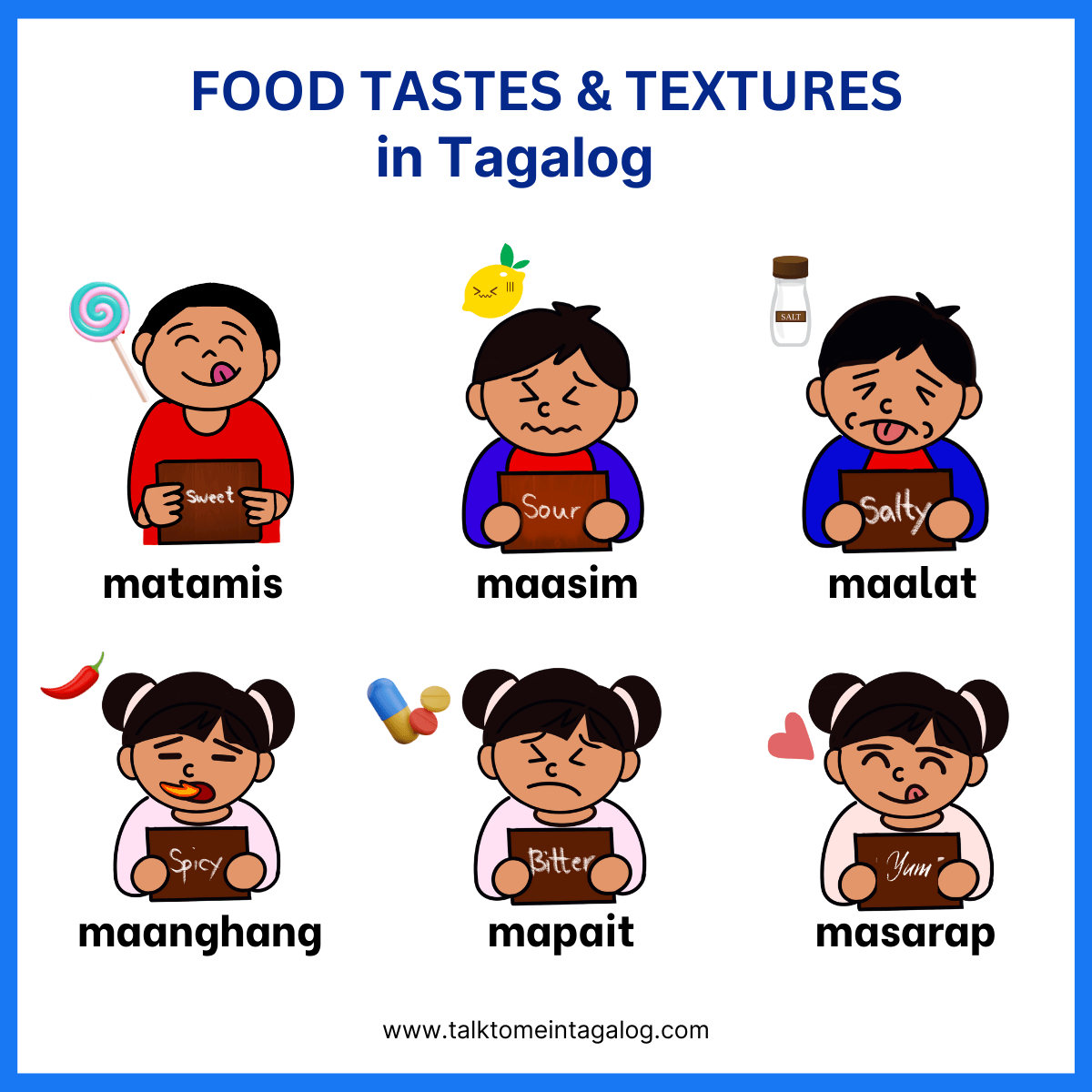
Learn how to describe food tastes, smells, and textures in Tagalog with English translations and example sentences. This guide introduces essential Filipino words for flavors like maalat (salty), maasim (sour), matamis (sweet), and aromas such as amoy malakas (strong smell), as well as textures like malambot (soft) and malutong (crispy). Each word comes with practical examples showing how to naturally describe food when cooking, eating, or talking about meals. This basic Tagalog lesson is recommended to learners, travelers, and food enthusiasts. This helps you express opinions, give recommendations, and discuss dishes in everyday conversations.
Food Tastes in Filipino: Watch This Beginner Tagalog Video
List of Food Tastes in Tagalog
| Tagalog | English |
|---|---|
| lasa | taste |
| matamis | sweet |
| maalat | salty |
| maasim | sour |
| mapait | bitter |
| maanghang | spicy |
| matabang | bland |
| mapakla | astringent taste |
| maanta | rancid |
| walang lasa | tasteless |
| masarap | delicious |
| hindi masarap | not delicious |
| malinamnam | savory |
| nakakaumay | cloying |
| amoy | smell |
| mabango | fragrant |
| mabaho | stinky |
| malansa | fishy smell |
| maanggo | gamey smell |
| amoy usok | smoky smell |
| amoy bawang | garlicky smell |
| amoy panis | spoiled smell |
| amoy bulok | smells rotten |
| amoy sunog | burnt smell |
| malambot | soft / tender |
| matigas | hard / firm |
| malutong | crispy |
| makunat | chewy |
| malagkit | sticky |
| malata | mushy |
| madulas | slimy |
| mamantika | greasy |
| buo-buo | lumpy |
| pinong-pino | powder-like |
| makatas | juicy |
| magatas | milky |
| malapot | thick (soup) |
| malabnaw | thin (soup) |
Try the quiz below and see how familiar these food taste and texture words in Filipino are to you.

| Maasim ang hilaw na sampalok. |
| (Unripe tamarind is sour.) |
| Maalat ang tuyo kaya bagay sa kanin. |
| (Dried fish is salty, so it goes well with rice.) |
| Malutong ang bagong lutong chicharon. |
| (Freshly cooked pork rind is crispy.) |
| Makunat ang karne kapag hindi naluto nang maayos. |
| (Meat is tough when it’s not cooked properly.) |
| Matamis ang hinog na mangga. |
| (Ripe mangoes are sweet.) |
| Mapait ang ampalaya pero masustansiya. |
| (Bitter melon is bitter, but it’s nutritious.) |
| Malansa ang isda kapag hindi nalinis nang maayos. |
| (Fish tastes fishy when it’s not cleaned properly.) |
Can you describe food tastes and textures in Tagalog? Test your vocabulary with this quiz! From sweet and salty to crispy and chewy, try to say the correct Tagalog word before clicking the toggle to see the answer. It’s a fun way to sharpen your skills in describing food in Filipino!
1. How do you describe the taste of sugar and honey in Tagalog?
Answer: matamis (sweet)
2. How do Filipinos describe the taste of calamansi or vinegar?
Answer: maasim (sour)
3. What is the Tagalog word for the taste of dried fish or soy sauce?
Answer: maalat (salty)
4. What is the Tagalog word for the taste of chili peppers?
Answer: maanghang (spicy)
5. How do you describe food that is crunchy or crispy, like chicharon?
Answer: malutong (crispy or crunchy)
Watch more Tagalog Learning Videos
Learn essential Filipino cooking terms in Tagalog with clear meanings and examples. This lesson introduces words commonly used in Filipino kitchens, recipes, and everyday cooking—from boiling and frying to steaming and grilling. A practical guide for learners who want to expand their Tagalog vocabulary and understand Filipino food culture better.
Learn how to say common fruits in Tagalog with clear English translations and natural pronunciation. This lesson introduces everyday Filipino words for fruits like mansanas (apple), ubas (grapes), pinya (pineapple), and more, while showing how to use them in real-life situations such as shopping, ordering in restaurants, or chatting with locals.
Master the names of common food items in Tagalog with clear English translations and natural pronunciation. This lesson covers everyday Filipino foods like rice, bread, fish, vegetables, fruits, snacks, and more, showing you how to use these words in real-life situations like shopping at the market, ordering in restaurants, or cooking at home.
Connect
Our YouTube Channels
Talk to Me in Tagalog
English-Tagalog Speaking Practice
Learn Filipino Language
OFW English Lessons
Want to support us?