
How to Say "If" or "When" in Tagalog | KAPAG in English
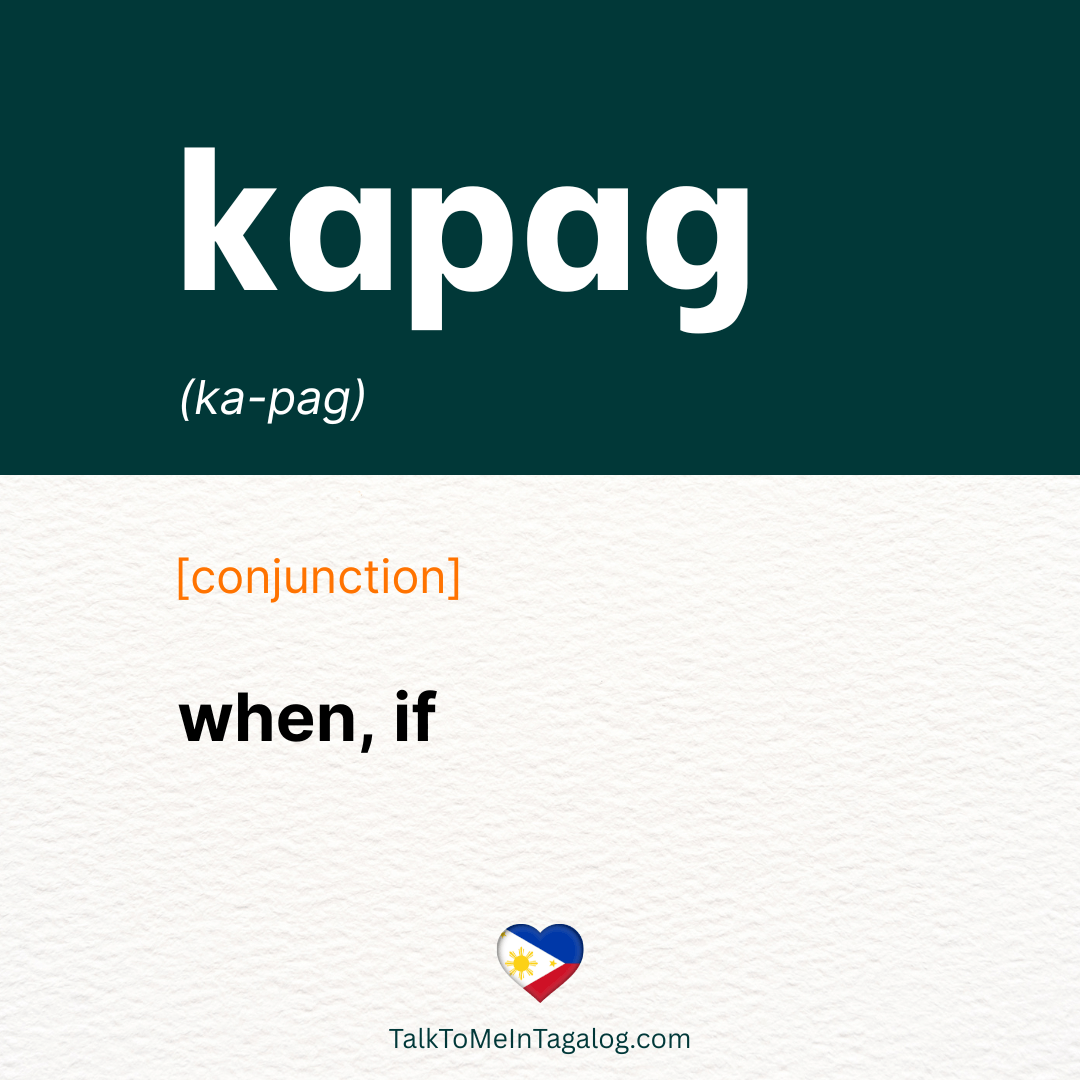
If you’ve been trying to figure out the Tagalog word that means “if” or “when” in a conditional sense, the conjunction you’re looking for is kapag. Filipinos use kapag all the time to talk about situations that happen under certain conditions or events that occur repeatedly, and this guide breaks down what the word actually means in everyday use. You’ll see how kapag fits naturally into real Filipino sentences through simple examples with English translations, giving you a clear feel for how it works in casual conversations. This is a helpful way to understand how Filipinos connect ideas, talk about cause-and-effect situations, and build more natural-sounding sentences in Tagalog.
Kumakain ako ng tsokolate kapag malungkot ako. (I eat chocolate when I’m sad.)
Nagiging masungit ako kapag nagugutom ako. (I get cranky when I’m hungry.)
Tawagin mo ako kapag tapos ka na. (Call me when you’re done.)
Magsabi ka kapag male-late ka. (Let me know if you’re going to be late.)
Nag-e-aircon kami kapag mainit. (We turn on the air conditioner when it’s hot.)
Magpahinga ka kapag may sakit ka. (Get some rest if you’re sick.)
Kapag may tanong ka, huwag kang mahiyang magtanong. (If you have a question, don’t be shy to ask.)
Walang pasok kapag may bagyo. (There are no classes when there’s a typhoon.)
Matatapos ito kaagad kapag nagtulungan tayo. (We’ll finish it quickly if we work together.)
Sagutin mo kaagad kapag tumawag si Lolo. (Answer right away when Grandpa calls.)
Ako ang bahala kapag wala si Ate. (I’m in-charge when Ate is not around.)
Huwag kang magulo kapag may bisita. (Behave when we have visitors. )
Lalong sumasakit ang ulo ko kapag wala akong tulog. (My headache gets worse when I haven’t slept.)
Hindi ako makapag-concentrate kapag maingay ang paligid ko. (I can’t concentrate when it’s noisy around me.)
Mas madaldal siya kapag kasama ang mga barkada niya. (She’s more talkative when she’s with her friends.)
Featured Filipino Word
Nakatitig siya sa malayo kapag nag-iisip. (He stares into space when he’s thinking.)
Wala siyang ganang makipagkwentuhan kapag pagod. (He doesn’t feel like chatting when he’s tired.)
Hindi ko siya makausap kapag wala siya sa mood. (I can’t talk to her when she’s not in the mood.)
Sabihan mo lang ako kapag handa ka na. (Just let me know when you’re ready.)
Masarap ang tulog ko kapag maayos ang kama. (I sleep well if the bed is tidy.)
Kumakahol ang mga aso kapag may dumadaan sa labas. (The dogs start barking whenever someone walks by outside.)
Hindi siya nagsasalita kapag may problema siya. (She doesn’t say anything when she has a problem.)
Nagluluto siya ng espesyal kapag may okasyon. (She cooks something special when there’s an occasion.)
Umiinom ako ng kape kapag inaantok ako. (I drink coffee when I feel sleepy.)
Pumapayat siya kapag hindi siya kumakain ng kanin. (She loses weight when she doesn’t eat rice.)
Hindi kami lumalabas kapag gabi na. (We don’t go out when it’s already night time. / We stay in when it’s night time.)
Nae-excite ako kapag malapit na ang bakasyon. (I get excited when vacation’s coming up.)
Hindi ko siya makontak kapag nasa probinsiya siya. (I can’t reach him when he’s in the province.)
Lagi siyang nakangiti kapag kausap ang crush niya. (She’s always smiling when talking to her crush.)
Nasa bahay lang ako kapag wala akong klase. (I just stay in when I don’t have classes.)
Lagi siyang bumibili ng cake kapag merong may birthday. (He always buys a cake when there’s a birthday.)
Uminom ka ng tubig kapag nasamid ka. (Take a sip of water if something goes down the wrong way.)
Tumatahimik ang buong bahay kapag tulog na ang mga bata. (The whole house gets quiet when the kids are asleep.)
Hindi ko siya iniistorbo kapag abala siya sa pag-aaral. (I don’t bother her when she’s busy studying.)
Mas malambing siya kapag may kailangan. (Shee’s more affectionate when he needs something.)
Itulak mo na lang kapag nabibigatan ka. (Just push it if it’s too heavy for you.)
Huwag kang sumama kapag tinatamad ka. (Don’t come if you’re feeling too lazy.)
Mag-shades ka kapag masyadong tirik ang araw. (Wear sunglasses when the sun is too strong.)
Napapanis ang gatas kapag hindi agad nailagay sa ref. (The milk spoils if it’s not put in the fridge right away.)
Palitan mo ang mga baterya kapag naubos na. (Change the batteries when they’re drained.)
Nalalanta ang mga halaman kapag hindi nadidiligan. (The plants wilt if they’re not watered.)
Namumula siya kapag nahihiya. (She blushes when she’s embarrassed.)
Nabubulok ang isda kapag hindi mo iniluto agad. (The fish spoils if you don’t cook it right away.)
Magpaturo ka kapag hindi mo maintindihan. (Get someone to teach you if you don’t get it.)
Huwag kang gumastos kapag wala kang pera. (Don’t spend when you don’t have any money.)
Umaalis kami ng maaga kapag malayo ang pupuntahan. (We leave early when we’re going somewhere far.)
Mas magaan ang pakiramdam ko kapag kasama kita. (I feel better when I’m with you.)
Watch more Tagalog Learning Videos
Looking for the Tagalog equivalent of “however”? Learn the natural Filipino phrase and connector “kaya lang” that is used to show contrast or exceptions in sentences.
Want to say “can” or “able to” in Tagalog? Learn the Filipino word ‘kaya” for expressing ability, permission, or possibility in everyday situations.
Need to express “even if” in Tagalog? Learn how to use “kahit na” naturally in Filipino to show contrast, condition, or persistence.
Connect
Our YouTube Channels
Talk to Me in Tagalog
English-Tagalog Speaking Practice
Learn Filipino Language
OFW English Lessons
Want to support us?