
How to Say "Especially" in Tagalog | LALO NA in English
How do you say “especially” in Tagalog? This lesson explains how lalo na is used in Filipino to highlight something important, single out a detail, or give extra emphasis in a sentence. You’ll see how lalo na works in real Tagalog conversations through practical examples paired with natural English translations, so you can use it confidently and sound more authentic. Learn how this versatile phrase shows preferences, stresses specific situations, and adds clarity to what you’re saying, making your Filipino more precise, expressive, and fluent.
Mainit dito lalo na sa hapon. (It gets hot here, especially in the afternoon.)
Mahilig ako sa prutas lalo na sa mangga. (I love fruits, especially mangoes.)
Masaya sa probinsya lalo na tuwing pyesta. (It’s fun in the province, especially during town fiestas.)
Mabait siya lalo na sa mga bata. (He’s kind, especially toward kids.)
Maraming tao sa mall lalo na kapag weekend. (There are a lot of people at the mall, especially on weekends.)
Maganda ‘yung palabas lalo na ang ending. (The show was great—especially the ending.)
Mabango ang Sampaguita lalo na kapag bagong pitas. (Sampaguita smells great, especially when it’s freshly picked.)
Mataas ang presyo ng mga bilihin lalo na ang gasolina. (The cost of goods is high, especially gasoline.)
Lahat sila mababait lalo na si Kuya Allan. (They’re all nice—especially Kuya Allan.)
Featured Filipino Word
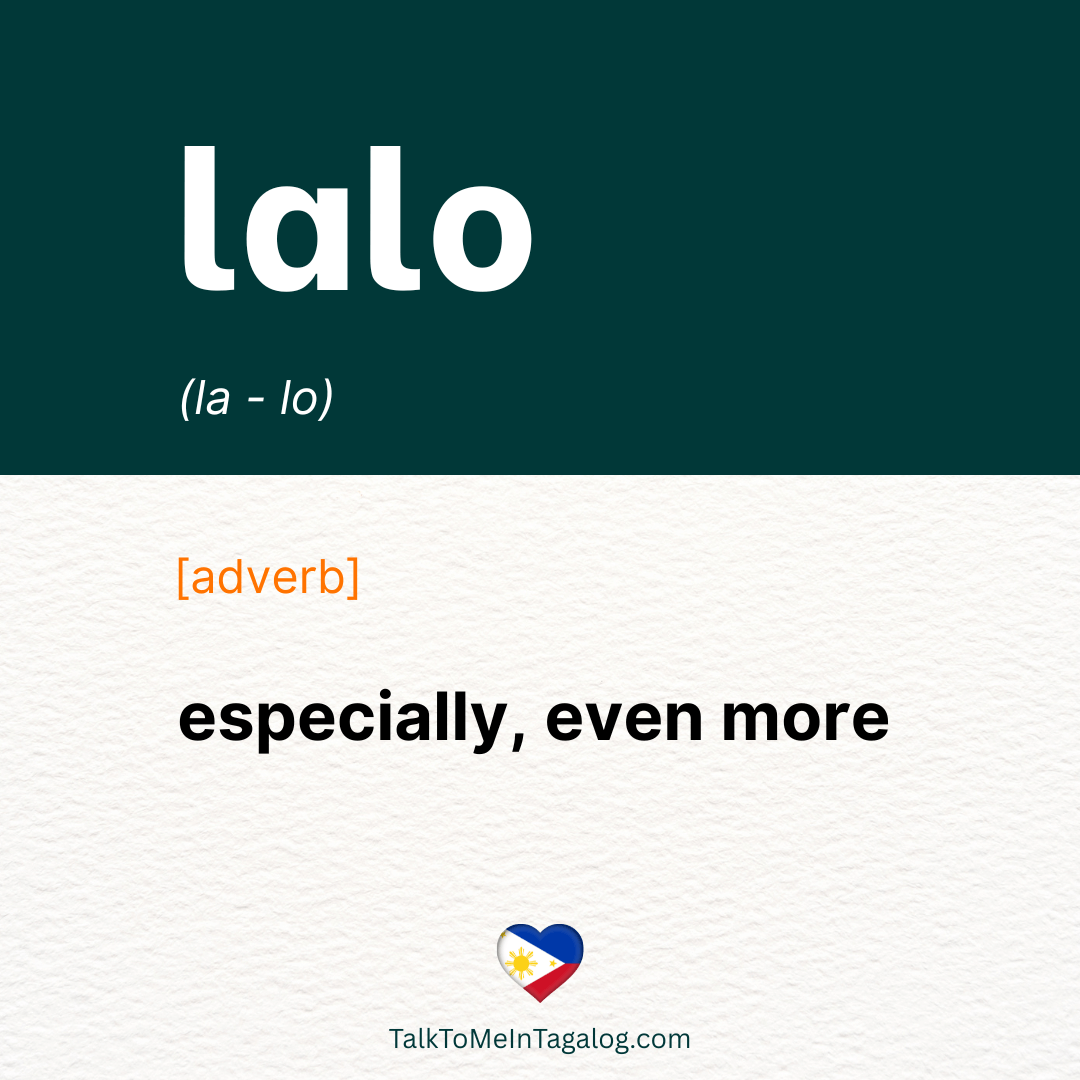
Bawal ang stress lalo na sa mga buntis. (Stress is a no-no, especially for pregnant women.)
Gusto ko ang restawran na ‘to lalo na ang ambiance. (I like this restaurant, especially the ambiance.)
Nakakahiya lalo na sa harap ng mga bisita. (It’s embarrassing, especially in front of the guests.)
Hindi ko siya gusto lalo na kung paano siya magsalita. (I don’t like her, especially the way she talks.)
Mahirap mag-budget lalo na kung maliit lang ang kita. (It’s hard to budget, especially with a low income.)
Ayoko ng maingay lalo na kapag may ginagawa ako. (I don’t like noise, especially when I’m working.)
Naiinip ako lalo na kapag walang internet. (I get really bored, especially when there’s no internet.)
Mahilig kaming mag-inuman lalo na tuwing merong may birthday. (We love drinking, especially when someone’s having a birthday.)
Gusto ko ng kape lalo na sa umaga. (I like coffee, especially in the morning.)
Nakakainis siya lalo na kapag nagmamagaling. (He’s annoying, especially when he acts like a know-it-all.)
Mahigpit ang amo namin lalo na sa oras. (Our boss is strict, especially about time.)
Nag-aalala ako lalo na kapag hindi ka tumatawag. (I get worried, especially when you don’t call.)
Malamig sa Benguet lalo na sa madaling-araw. (It’s cold in Benguet, especially at dawn.)
Madilim sa lugar na iyon lalo na sa gabi. (It’s dark in that area, especially at night.)
Matao sa mall lalo na kapag araw ng suweldo. (The mall gets really crowded, especially on payday.)
Nakakatamad kumilos lalo na kapag taglamig. (It’s hard to get moving, especially during the cold season.)
Delikado ang ganitong gamot lalo na sa mga bata. (This kind of medicine is dangerous, especially for kids.)
Huwag mong iwang bukas ang mga bintana lalo na kapag umuulan. (Don’t leave the windows open, especially when it’s raining.)
Ang hirap kumilos lalo na kapag walang tubig. (It’s hard to get anything done, especially when there’s no water.)
Nakakapagod ang biyahe lalo na kapag matrapik. (The trip is exhausting, especially when there’s traffic.)
Masaya ang party lalo na nang dumating ka. (The party was fun, especially when you showed up.)
Watch more Tagalog Learning Videos
Understand the meaning and usage of Filipino adjectives with the prefix “mapag-”, such as mapagbigay, mapagmahal, and mapagpatawad. Learn how this prefix expresses tendencies or qualities in Tagalog.
Learn how to use “na naman” in Tagalog to express repetition, surprise, or mild frustration—similar to “yet again” in English. See how it’s used naturally in Filipino conversations.
Connect
Our YouTube Channels
Talk to Me in Tagalog
English-Tagalog Speaking Practice
Learn Filipino Language
OFW English Lessons
Want to support us?