
How to Say "Since Then" in Tagalog | MULA NOON in English
How to say “since then,” “from then on,” or “ever since” in Tagalog? Filipinos use “mula noon” to mark a moment in the past that continues to affect the present. It’s the phrase you need when talking about ongoing situations, long-term changes, or personal timelines. In this lesson, you’ll see how “mula noon” appears in natural Tagalog sentences, along with clear English translations that make each example easy to understand. By learning how to use it correctly, you’ll be able to describe past-to-present experiences smoothly and sound more authentic when sharing stories in Filipino.
Mula noon naging magkaibigan kami.(We’ve been friends since then.)
Mula noon hindi ko na siya nakita. (I haven’t seen her since.)
Hindi ko na siya tinext mula noon. (I haven’t texted her since then.)
Mula noon, sabay na kaming umuuwi. (We’ve been going home together since then.)
Mula noon, hindi niya na ako sinisigawan (He hasn’t yelled at me since then.)
Mula noon, araw-araw na silang nagkikita. (They’ve been seeing each other every day since then.)
Lagi na akong nagta-taxi mula noon. (I’ve been taking taxis regularly since then.)
Mula noon, hindi ko na siya pinagkatiwalaan. (From then on, I stopped trusting him.)
Mula noon, nagbago na ang pananaw ko sa buhay. (Since then, my outlook on life changed.)
Mula noon, hindi ko na siya kinausap. (I haven’t talked to him since then.)
Featured Filipino Word
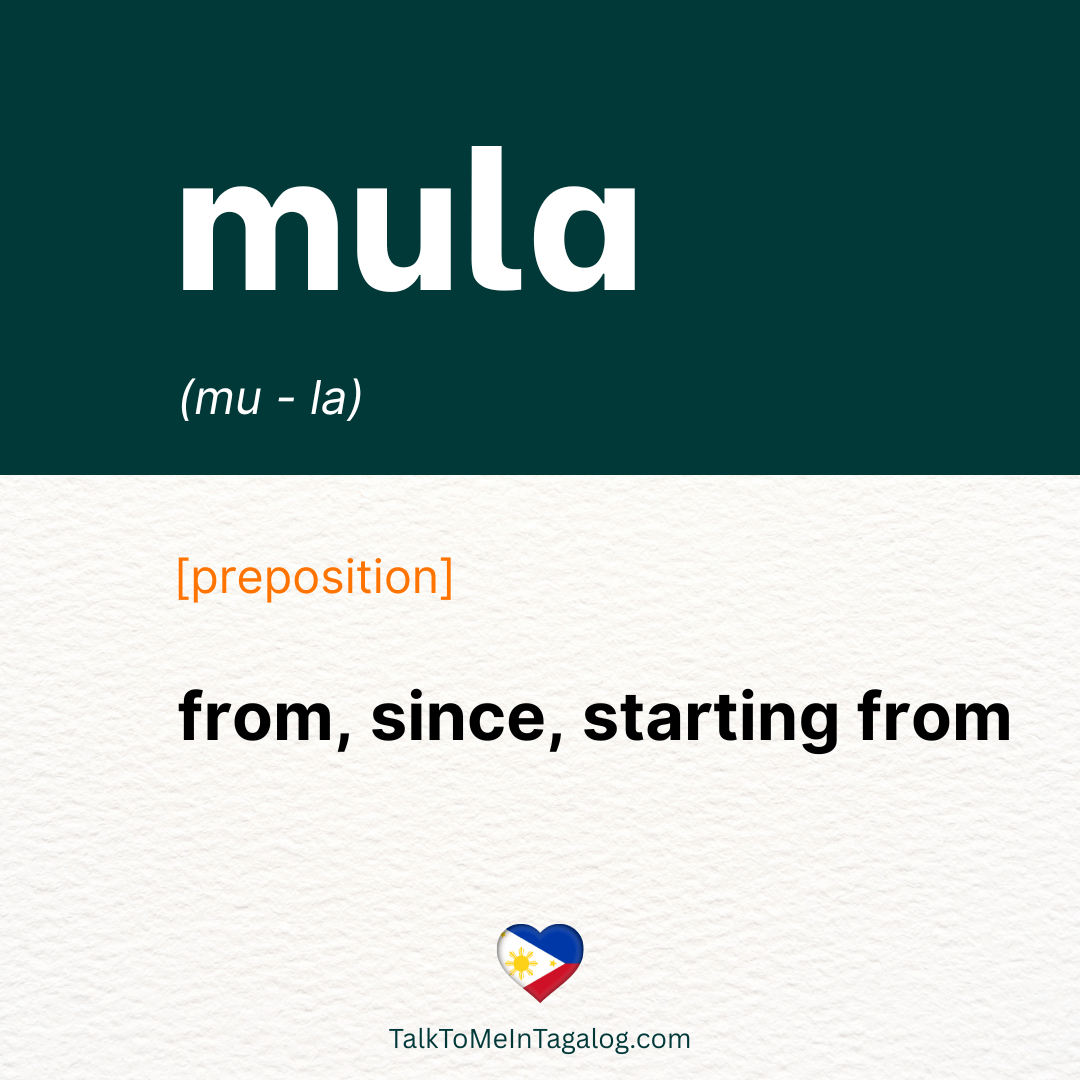

Mula noon, naging close kami. (We’ve been close since then.)
Mula noon, nagbago na siya. (He changed from that point on.)
Tumigil na ako sa pag-inom ng alak mula noon. (I stopped drinking alcohol since then.)
Lumakas na ang katawan niya mula noon. (He’s gotten stronger since then.)
Nagka-TB siya dati kaya mula noon, itinigil na niya ang paninigarilyo. (He had TB before, so he’s quit smoking since then.)
Mas madalas na siyang ngumiti mula noon. (He’s been smiling more often since then.)
Natuto siyang magluto kaya mula noon, siya na ang tagaluto sa bahay. (He learned how to cook, so from then on, he became the one who cooked at home.)
Naranasan niya ang hirap ng buhay kaya mula noon, nagsumikap siya. (He experienced how hard life was, so from then on, he worked hard.)
Nagbago ang schedule ko kaya mula noon, mas maaga na akong natutulog. (My schedule changed, so from then on, I started sleeping earlier.)
Naaksidenta ako dati kaya mula noon, nag-iingat na ako. (I had an accident before, so I’ve been more careful since then.)
Nagka-trabaho siya sa malayo kaya mula noon, bihira na magkakuwentuhan. (He got a job far away, so from then on, we rarely got to catch up.)
Nakatikim siya ng adobo sa handaan. Mula noon, ‘yun na ang paborito niya. (He got to taste adobo at a party, and from then on, it became his favorite.)
Nabangga siya kailan lang. Mula noon, naging maingat na siyang magmaneho. (He got into a car accident recently, and from then on, he started driving more carefully.)
Nawalan siya ng trabaho noong may pandemya. Mula noon, nagnegosiyo na lang siya. (He lost his job during the pandemic, and from then on, he just ran a small business.)
Napagalitan na siya dati kaya mula noon, sumusunod na siya sa mga patakaran. (He got scolded before, so from then on, he started following the rules.)
Pinuri siya ng boss niya kaya mula noon, naging mas masipag siya. (As long as I’m with you, I’m happy.)
Nakarating siya Budapest kaya mula noon, mahilig na siyang mag-travel. (He got to visit Budapest, and from then on, he developed a love for traveling.)
May tumulong sa kanya dati kaya mula noon, tinutulungan na rin niya ang iba. (Someone helped him before, so from then on, he started helping others too.)
Natikman niya ang manok sa Jollibee kaya mula noon, palagi na siyang umu-order. (He tasted the chicken at Jollibee, and from then on, he kept ordering it.)
Nawala ang kuwintas ko — mula noon, naging mas maingat ako. (I lost my necklace — since then, I’ve been more careful.)
Watch more Tagalog Learning Videos

Curious how to say your birth month or mark a holiday in Filipino? Watch this video and discover how each month is used in everyday conversation.

The Philippines may only have two main seasons, but they’re essential to know. Watch this video to understand how Filipinos talk about weather, time of year, and local climate patterns.

Learn 7 common Tagalog idioms used in everyday Filipino conversations and what they really mean. Watch now to level up your real-world Filipino vocabulary!
Connect
Our YouTube Channels
Talk to Me in Tagalog
English-Tagalog Speaking Practice
Learn Filipino Language
OFW English Lessons