
How to Say Used to Be or Previously in Filipino | DATI in English
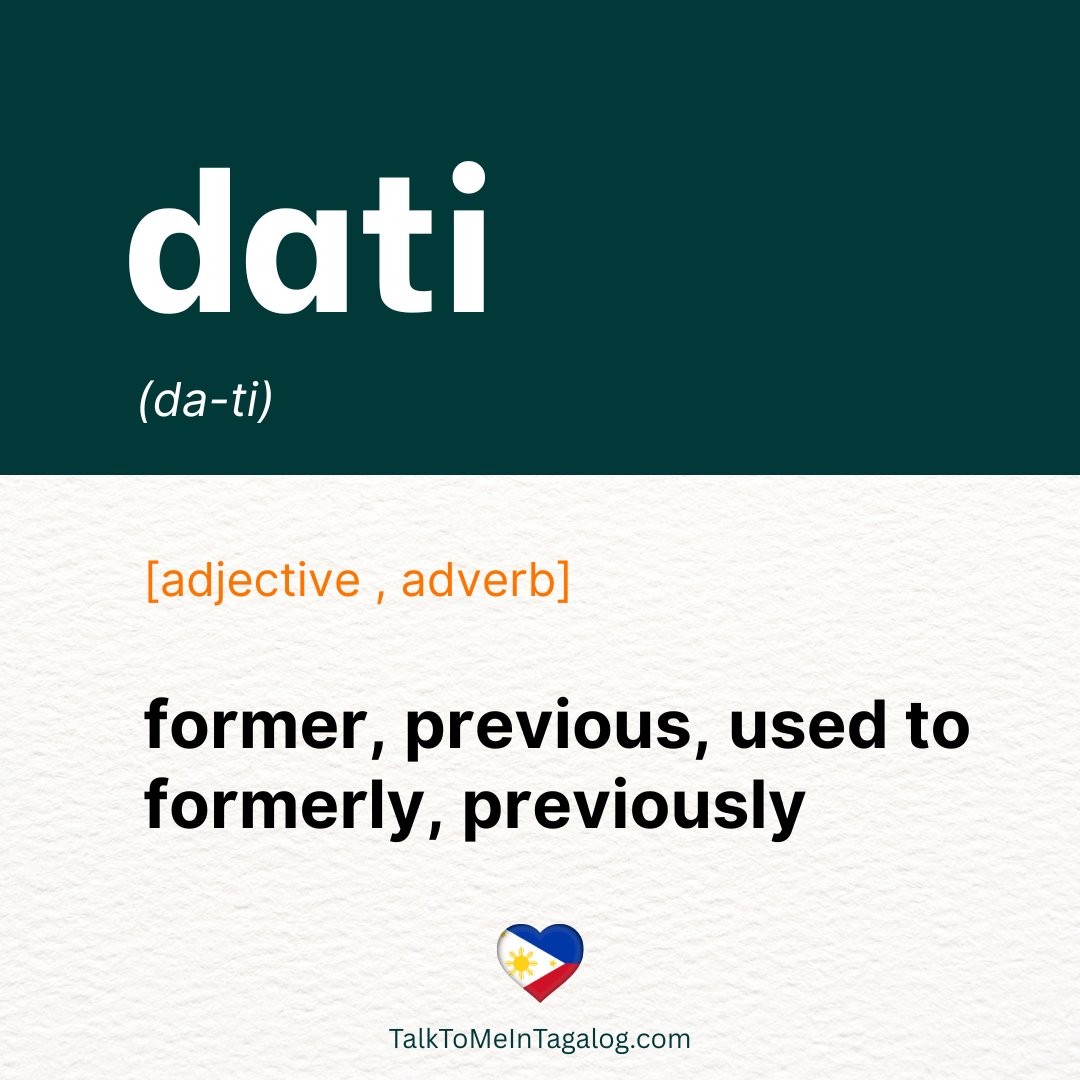
How to say “used to be,” “before,” “previously,” or “formerly” in Tagalog often leads you to the word “dati”, a short and flexible term Filipinos use anytime they talk about something that belonged to the past. In real conversations, dati can refer to an old habit, a former situation, or a previous truth, and it naturally slips into stories or explanations about how things once were. You’ll find example sentences with English translations that show how Filipinos actually use dati in everyday speech, giving you a clearer sense of its tone and timing without sounding stiff or overly formal.
Payat ako dati. (I used to be skinny.)
Nakatira kami sa Batangas dati. (We used to live in Batangas.)
Mahirap lang sila dati. (They used to be poor.)
Dati akong nagtatrabaho sa Ortigas. (I used to work in Ortigas.)
Dati kaming magkaklase. (We used to be classmates.)
Iniiwasan niya ako dati. (She used to avoid me.)
Dati, simple lang ang buhay ko. (My life used to be simple.)
May tindahan kami dati. (We used to have a store.)
Dati siyang tumutugtog sa isang banda. (He used to play in a band.)
Pangarap ko ‘yan dati. (It used to be my dream.)
Walang kuryente doon dati. (That place didn’t have power before.)
Iyan dati ang gusto kong bilhin. (That’s what I wanted to buy before.)
Sumasakit dati ang likod ko. (I used to get backaches.)
Featured Filipino Word
Takot ako dati sa ipis. (I used to be scared of cockroaches.)
Nakarating ka na ba doon dati? (Have you been there before?)
Tingin ko nagkita na tayo dati. (I think we’ve met before.)
Naikuwento niya na ‘yan sa akin dati. (She told me that story before.)
Hindi ako marunong magluto dati. (I didn’t know how to cook before.)
Dati siyang katulong sa bahay. (She used to work as a housemaid.)
Nalilito ako dati sa kanilang dalawa. (I used to get them mixed up.)
Malapit sa dagat ang dati niyang bahay. (Her former home was located near the beach.)
Dating simbahan ang gusaling ito. (This building used to be a church.)
Natalo ang dating kampeon sa huling laban. (The former champion was defeated in the final match.)
Iginagalang pa rin siya ng mga dati niyang empleyado. (His former employees still respect him.)
Humingi siya ng tawad sa dati niyang nobya. (He apologized to his former girlfriend.)
Nakasalubong ko sa palengke ang dati kong titser. (I ran into my former teacher at the market.)
Itinanggi niya na dati ang lahat ng mga paratang sa kanya. (He had previously denied all the accusations against him.)
Iba ang pamamalakad ng dating administrasyon. (The previous administration handled things differently.)
Mahiyain ako dati pero nagbago na ako. (I used to be shy, but I’ve changed.)
Dati, konti lang ang mga puno rito. (Before, there were only a few trees here.)
Dati pang problema ‘yan. (That’s been a problem for a long time.)
Dati ko siyang amo. (He’s my former boss.)
Maputik dati ang kalsada rito. (The road here used to be muddy.)
Maayos dati ang relasyon nilang dalawa. (Those two used to have a good relationship.)
Dati pa silang magkaibigan. (They’ve been friends for a long time.)
Dati pa akong nagdududa sa kanya. (I’ve had doubts about him for a long time.)
Dating mataba si Joel. (Joel used to be chubby.)
Dating mayaman ang pamilya nila. (Their family used to be rich.)
Namatay na ang dating may-ari niyan. (Its previous owner already passed away.)
Dati siyang presidente ng kumpanya. (He was the company’s former president.)
Halos araw-araw kaming nagkikita dati. (We used to be see each other almost every day.)
Dati kong katrabaho si Anuja. (Anuja used to be my coworker.)
Watch more Tagalog Learning Videos
Looking for the Tagalog word for “before”? Learn how to use “bago” in Filipino to talk about time, sequence, and events with clear examples.
Want to say “Do you know?” in Tagalog? Learn how to use common Filipino phrases like “Alam mo ba?” in natural conversation.
Curious about the Filipino idiom “balat-sibuyas”? Discover what this Tagalog expression means, when to use it, and how it describes someone overly sensitive or easily hurt.
Connect
Our YouTube Channels
Talk to Me in Tagalog
English-Tagalog Speaking Practice
Learn Filipino Language
OFW English Lessons
Want to support us?