
How to Say "But" in Tagalog | PERO in English
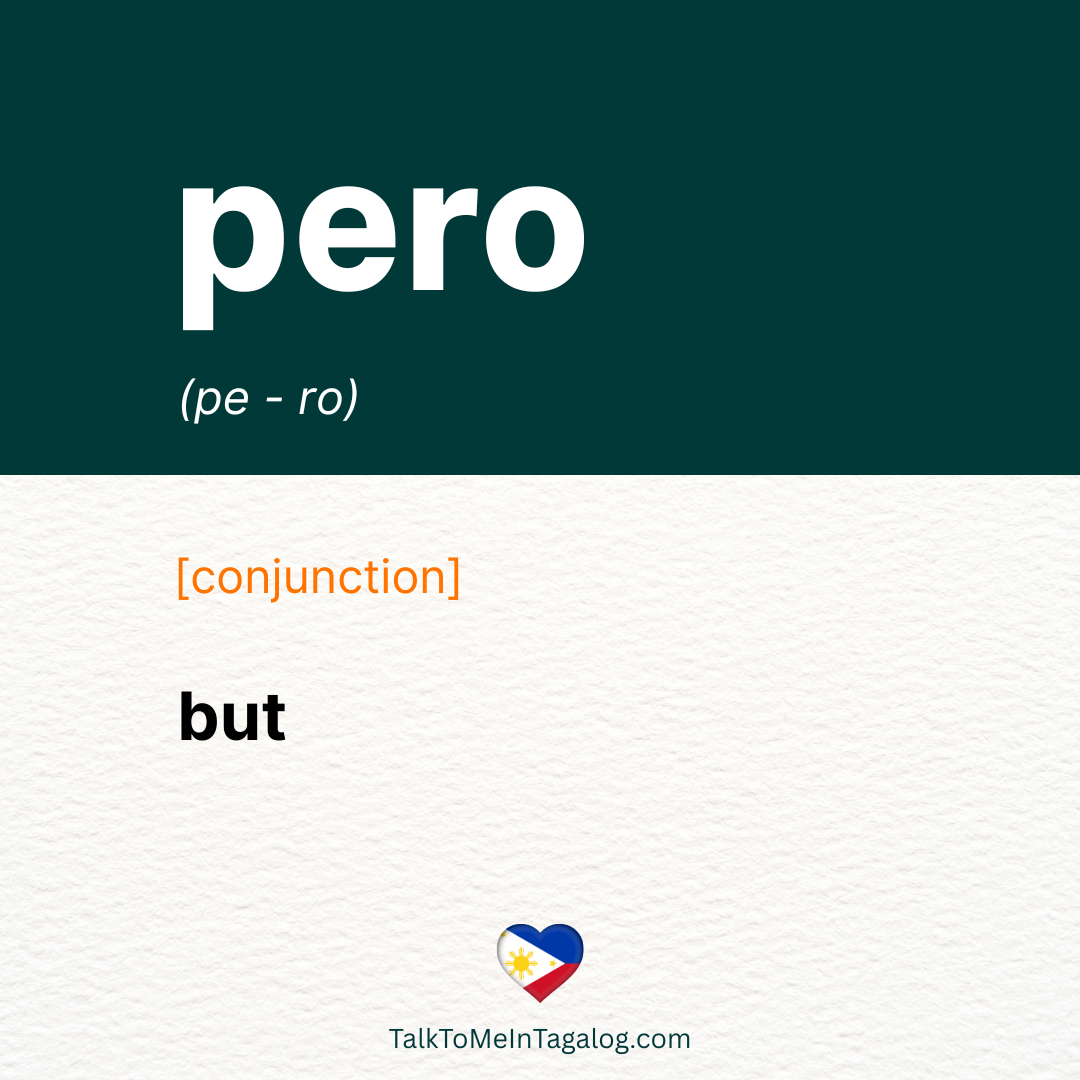
Want to know the best way to say “but” in Tagalog? This lesson focuses on “pero,” the essential conjunction Filipinos use to show contrast, add exceptions, or shift ideas in conversation. Through practical sentences with clear English translations, you’ll see how “pero” fits naturally into everyday speech. Learning it will help you express opposing ideas smoothly and speak Tagalog more confidently.
How to Say BUT in Filipino: Watch this easy Tagalog Lesson for Beginners
Matalino siya pero mahiyain. (He’s smart, but shy.)
Mahangin pero napakainit. (It’s windy, but it’s so hot.)
Guwapo si Roger pero mayabang. (Roger is handsome, but arrogant.)
Nagluto ako pero sunog. (I cooked, but it got burned.)
May oras ako ngayon pero bukas wala. (I have time now, but not tomorrow.)
Puwede naman pero delikado. (It’s possible, but it’s risky.)
Gusto ko ‘yon pero sobrang mahal. (I like it, but it’s too expensive.)
Kumatok ako pero walang sumagot. (I knocked, but no one answered.)
Alam ko kung paano pero hindi ako eksperto. (I know how, but I’m not an expert.)
Tinawagan kita pero hindi ka sumagot. (I called you, but you didn’t answer.)
Maaga akong nagising pero tinatamad ako. (I woke up early, but I’m feeling lazy.)
Featured Filipino Word
Um-oo siya pero hindi siya dumating. (She said yes, but she didn’t show up.)
Gusto kong magmaneho pero wala akong lisensiya. (I want to drive, but I don’t have a license.)
Mukhang madali pero hindi. (It looks easy, but it’s not.)
Handa na siya pero kabado. (He’s ready, but nervous.)
Payag ako pero may tanong ako. (I agree, but I have a question.)
Luma na ‘to pero magagamit pa naman. (It’s old, but still useful.)
Nakakatawa siya pero nakakainis din. (He’s funny, but also annoying.)
Alam ko ‘yon pero nakalimutan ko. (I know it, but I forgot.)
Gusto ko ang lugar pero maingay. (I like the place but it’s noisy.)
Magaling siyang kumanta, pero mahiyain. (He’s good at singing, but shy.)
Mura ‘yung pagkain pero masarap naman. (The food was cheap, but delicious.)
Gusto niya pa pero wala nang natira. (He wanted more, but there was none left.)
Sinubukan ko pero hindi ko kaya. (I gave it a shot, but I just couldn’t.)
Ang haba ng pelikula pero sulit naman. (The movie was long, but worth it.)
Gusto ko sanang sumali pero ang dami-dami kong ginagawa. (I want to join, but I’m too busy.)
Libre ‘yon pero kailangan mong mag-register. (It’s free, but you have to register.)
Malapit kaming magkaibigan pero hindi kami mag-best friend. (We’re close, but we’re not best friends.)
Naiintindihan ko pero hindi ako sang-ayon. (I understand, but I don’t agree.)
Pupunta ako pero kung sasama ka lang. (I’ll go, but only if you come.)
Busog na ako pero gusto ko pa ng panghimagas. (I’m full, but I want some dessert.)
Naglinis na ako pero magulo pa rin. (I already cleaned, but it’s still messy.)
Gusto ko ng kape pero wala na tayong gatas. (I want coffee, but we’re out of milk.)
Watch more Tagalog Learning Videos

Discover how the Tagalog word puwede is used to ask for permission, suggest options, and make polite requests in daily Filipino talk. This video is for learners who want to get comfortable using puwede in natural Tagalog lines and pick up useful Filipino expressions along the way.
Learn how to say “because” in Tagalog using the word kasi through natural Filipino sentences and everyday conversations. This video is great for learners who want to understand how kasi works in Tagalog grammar and how to explain reasons clearly in Filipino.

Learn how to say “he said” or “she said” in Tagalog using everyday expressions like sabi niya in real Filipino conversations. If you’ve ever wondered how Filipinos report what someone said or how sabi fits into natural speech, this lesson breaks it down with clear, practical examples.
Connect
Our YouTube Channels
Talk to Me in Tagalog
English-Tagalog Speaking Practice
Learn Filipino Language
OFW English Lessons
Want to support us?