
How to Say "Really" in Tagalog with Examples | TALAGA in English
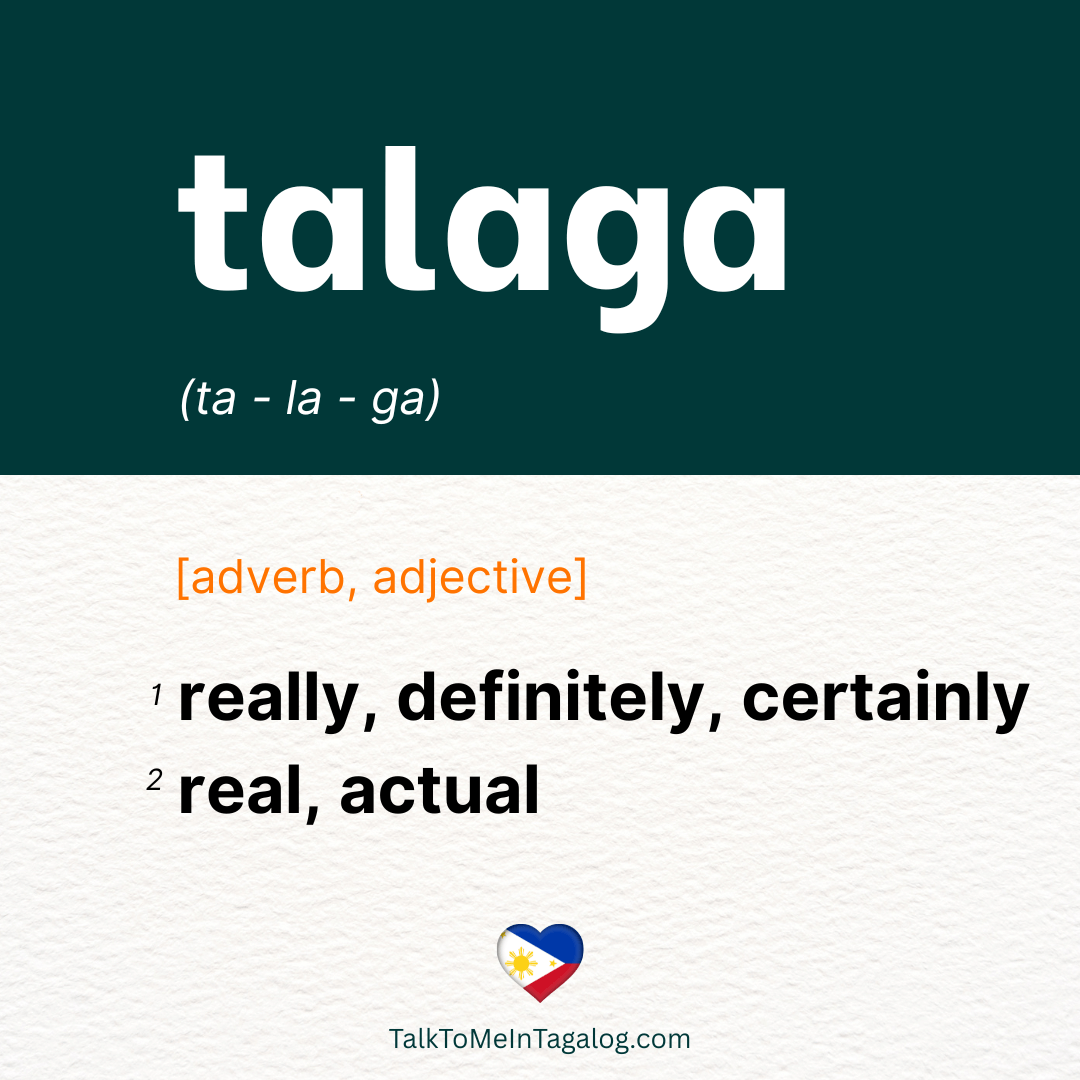
Wondering how Filipinos say “really” when expressing surprise, disbelief, or strong emotion? This Tagalog lesson takes a closer look at “talaga,” one of the most common Filipino words used to add emphasis or react to something unexpected. You’ll see how native speakers use it in real conversations through practical, everyday examples paired with clear English translations. After this lesson, you’ll understand its natural tone and learn how to use “talaga” smoothly and confidently in your own Tagalog.
How to Say REALLY in Filipino: Watch this Tagalog Lesson for Beginners
Ang galing mo talaga! (You’re really amazing!)
Ang bilis talaga ng panahon. (Time really flies.)
Hindi ko talaga matiis ang ugali niya. (I really can’t stand his attitude.)
Napakabait talaga ni Fatima. (Fatima is really very kind.)
Hindi ko talaga alam. (I really don’t know.)
Nagbago na talaga siya, nakakalungkot. (He has really changed, how sad.)
Talagang walang-wala kami noon. (We really had nothing back then.)
Ang saya-saya ko talaga ngayon. (I’m really happy right now.)
Mapagkakatiwalaan kaya talaga ang katulong namin? (I wonder if our maid is really trustworthy.)
Ah, talaga? Hindi halata. (Oh, really? It doesn’t show.)
Totoo talaga ‘yon. (That’s really true.)
Pasensiya na. Hindi ko talaga sinasadya ‘yon. (I’m sorry. I really didn’t mean it.)
Gusto ko talagang bumalik sa Switzerland. (I really want to go back to Switzerland.)
Ayoko talagang lumabas kapag may baha. (I really don’t want to go out when there’s a flood.)
Talagang mapagkumbaba siya kahit sikat na. (He’s really humble even though he’s famous.)
Matalino talaga ang batang ‘yan. (That kid is really smart.)
Sobrang nipis talaga ng buhok ko. (My hair is really thin.)
Featured Filipino Word
Ayoko talaga ng paulit-ulit. (I really don’t like repeating things.)
Ayaw mo ba talagang sumama? (You really don’t want to come?)
Hiyang-hiya talaga ako kanina. (I was really embarrassed earlier.)
Hindi ka pa talaga nakakatikim ng sampalok? (You really haven’t tried tamarind yet?)
Hindi talaga siya marunong makisama. (He really doesn’t know how to get along with people.)
Wala ka talaga sa sarili mo kahapon. (You really weren’t yourself yesterday.)
Nagulat talaga ako sa presyo. (I was really shocked by the price.)
Ang lakas mo talagang kumain! (You really eat a lot!)
Sobrang trapik talaga kanina. (Traffic was really awful earlier.)
Nag-enjoy talaga ako sa party. (I really had a good time at the party.)
Ang init talaga ngayon. (It’s really hot today.)
Kilalang-kilala ko talaga siya. (I know him really well.)
Pasensiya ka na talaga. (I’m really sorry.)
Kapatid niya ba talaga ‘yon? (Is that really her sister?)
Palpak talaga siya sa pagdedesisyon. (He’s really terrible at making decisions.)
Hindi ko talaga akalain na gagawin niya ‘yon. (I really didn’t think he’d do that.)
Kailan mo na talagang ipa-X-ray ‘yan. (You really need to have it X-rayed.)
Meron ba talagang multo? (Do ghosts really exist?)
Hindi ko talaga maintindihan. (I really don’t understand.)
Nalilito talaga ako sa mga formula. (I really get confused with the formulas.)
Hindi ko talaga kaya ‘yon. (I really can’t do it.)
Ang cute niya talaga! (He’s really cute!)
Nag-aalala talaga ako sa kanya. (I’m really worried about him.)
Pagod na pagod talaga siguro siya. (He must have been really exhausted.)
Hindi ko talaga alam kung ano ang nasa isip niya. (I really don’t know what’s on his mind.)
Sorry pero natatakot talaga ako. (Sorry, but I’m really scared.)
Natutuwa talaga ako na nangyari ‘yon. (I’m really glad it happened.)
Hindi ko talaga inaasahan ‘yon. (I really didn’t expect it.)
Ang bigat talaga nito. (This is really heavy.)
Talaga? Kailan pa? (Really? Since when?)
Mahirap talaga ang buhay. (Life is really hard.)
Siya talaga ang gusto ko. (He’s really the one I like.)

Watch more Tagalog Learning Videos


Wondering how to say “again” in Filipino? See how the Tagalog words “uli” and “ulit” are used in casual and everyday Filipino sentences to express repetition.

Learn 1000 useful Filipino sentences with English translations to boost your daily conversation skills! Expand your vocabulary and get familiar with natural Tagalog sentence patterns.
Connect
Our YouTube Channels
Talk to Me in Tagalog
English-Tagalog Speaking Practice
Learn Filipino Language
OFW English Lessons
Want to support us?