
Vegetables in Tagalog
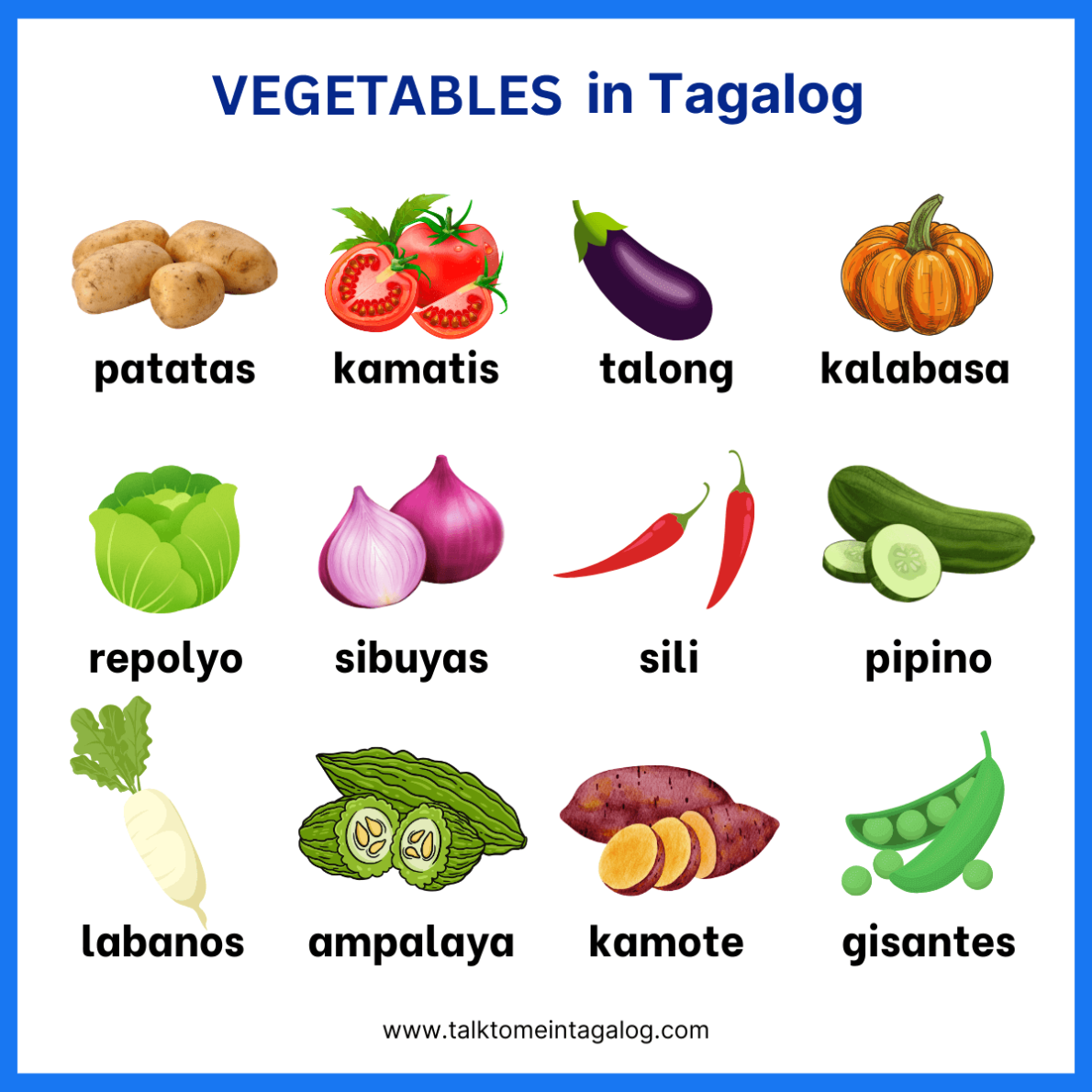
Learn the names of common vegetables in Tagalog with clear English translations and Filipino pronunciations. This lesson introduces you to everyday gulay (vegetables) you’ll find in the Philippines, such as kamatis (tomato), talong (eggplant), ampalaya (bitter gourd), and sitaw (string beans). You’ll also discover how to use these Tagalog vegetable words in simple sentences and conversations, especially when cooking, grocery shopping, or ordering food. Understanding these Filipino words helps you talk naturally about ingredients, recipes, and traditional dishes like pinakbet or sinigang.
Learn Names of Vegetables in Filipino: Watch This Beginner Tagalog Video
List of Vegetables in Tagalog
| Tagalog | English |
|---|---|
| gulay | vegetable |
| repolyo | cabbage |
| mustasa | mustard green |
| kangkong | water spinach |
| letsugas | lettuce |
| pechay | Chinese cabbage |
| malunggay | moringa |
| saluyot | jute leaves |
| alugbati | Malabar spinach |
| wansoy | coriander |
| kintsay | Chinese celery |
| talbos ng kamote | sweet potato leaves |
| dahon ng gabi | taro leaves |
| patatas | potato |
| bawang | garlic |
| sibuyas | onion |
| luya | ginger |
| luyang-dilaw | turmeric |
| labanos | radish |
| kamote | sweet potato |
| kamoteng-kahoy | cassava |
| gabi | taro |
| singkamas | turnip / jica |
| ube | purple yam |
| kalabasa | squash |
| ampalaya | bitter melon |
| upo | bottle gourd |
| patola | sponge gourd |
| kundol | winter melon |
| sayote | chayote |
| mani | peanut |
| munggo | mung beans |
| gisantes | green peas |
| patani | Lima beans |
| bataw | hyacinth bean |
| garbansos | chickpea |
| sitaw | string beans |
| sitsaro | snow peas |
| sigarilyas | winged beans |
| toge | mung bean sprouts |
| Baguio beans | green beans |
| kamatis | tomato |
| mais | corn |
| talong | eggplant |
| pipino | cucumber |
| okra | lady finger |
| siling labuyo | chili pepper |
| siling pula | bell pepper |
| siling haba | green chili pepper |
| kabute | mushroom |
| labong | bamboo shoots |
| linga | sesame seeds |
| tanglad | lemongrass |
| atsuete | annatto |
| lato | seaweed |
| pako | edible fern |
| puso ng saging | banana blossom |
Take the quick quiz below and see what Filipino vegetable names you still remember.
| Bumili ka nga ng talong sa palengke. |
| (Go buy some eggplant at the market.) |
| Maraming bitamina ang kalabasa. |
| (Squash has a lot of vitamins.) |
| Ang mahal ng isang kilong patatas. |
| (A kilo of potatoes is so expensive.) |
| Nagluto ako ng ginisang upo. |
| (I cooked sautéed bottle gourd.) |
| Mahilig siya sa ampalaya kahit mapait. |
| (She likes bitter melon even though it’s bitter.) |
| Ayoko ng lasa ng malunggay. |
| (I don’t like the taste of moringa.) |
| Marunong ka bang gumawa ng ensaladang pipino? |
| (Do you know how to make a cucumber salad?) |
Take this quick Tagalog Vegetables Quiz to test your knowledge of Filipino vegetable names! Read each question and say your answer out loud. When you’re ready, click the toggle to see the correct answer. This fun and easy quiz makes learning and remembering Tagalog vegetable names effortless!
1. This round vegetable has layers and is often used to add flavor to dishes. What is it?
Answer: sibuyas (onion)
2. This vegetable is large, round, and has green or purple leaves. It’s often used in coleslaw. What is it?
Answer: repolyo (cabbage)
3. This yellow vegetable is often eaten on the cob or turned into popcorn. What is it?
Answer: mais (corn)
4. This small, spicy vegetable is often used to add heat to dishes and comes in red or green varieties. What is it?
Answer: sili (chili pepper)
5. This vegetable has a strong smell and is used to add flavor to many dishes. What is it?
Answer: bawang (garlic)
Watch more Filipino Language Videos
Master how to talk about food tastes and textures in Tagalog with this beginner-friendly lesson that includes simple English translations and clear pronunciation. This video teaches useful Filipino vocabulary for flavors and textures, making it easy to describe food in everyday conversations.
This basic Tagalog lesson for beginners teaches the names of fruits in Filipino with clear English translations and proper pronunciation. In this video, you’ll learn essential Tagalog vocabulary for fruits, explained in a simple and easy-to-follow way.
This basic Filipino language lesson for beginners introduces essential Filipino cooking terms with clear English translations and correct pronunciation. The video makes learning Tagalog vocabulary for cooking simple and beginner-friendly.
Connect
Our YouTube Channels
Talk to Me in Tagalog
English-Tagalog Speaking Practice
Learn Filipino Language
OFW English Lessons
Want to support us?